A concrete driveway installation in Powell follows the same fundamental process as any Central Ohio project – demolition, base preparation, reinforcement, pour, and finishing – but Powell’s newer residential development, active permitting requirements, and some of the higher design expectations in the Columbus market mean there are details worth knowing before you start. Here’s a complete guide to what the process involves, what finish options work well in Powell, and what to expect from a well-executed installation.
Concrete Driveways in Powell: What the Local Market Looks Like
Powell has grown significantly over the past two decades into one of the more sought-after residential communities north of Columbus. Newer homes, larger lots, and active neighborhood associations mean driveways here are noticed – by neighbors, by visitors, and by buyers when properties eventually sell.
We see a few things come up consistently on Powell driveway projects. Newer homes sometimes have driveways that were installed to builder grade – functional but not built with the same specs as a quality custom installation. Over time, the base inadequacies in those installations show up as cracking and settling. Replacement at that point is the right call, and it’s an opportunity to get the installation right the second time around. Powell lots also tend to have more varied grades than older Columbus neighborhoods, which makes drainage planning an important part of the upfront work.
When Replacement Makes More Sense Than Repair
Not every Powell driveway needs full replacement. But knowing when to stop patching and start over saves money and frustration in the long run. The signs that point toward replacement include: widespread cracking across multiple sections rather than isolated areas, panels that have settled and shifted creating height differences and edges, surface scaling across large portions of the driveway, or a driveway that’s been patched several times and keeps developing new damage.
That last pattern almost always indicates base failure – the subgrade or gravel base beneath the slab has shifted, eroded, or was never properly prepared. Patching over a failed base produces temporary results. Replacement with properly prepared base material is the fix that actually lasts.
Our driveway replacement vs. repair guide walks through the decision framework in detail. We also provide a straightforward assessment during every free estimate – if repair makes more sense for your situation, we’ll tell you.
The Driveway Installation Process in Powell
Permits and Site Assessment
Driveway work in Powell requires permits, and work involving the apron – the section connecting your driveway to the street – requires coordination with the City of Powell’s engineering requirements. We handle permit applications as part of every project. The free estimate includes a site visit to assess drainage, grade, and any layout changes the homeowner wants to make before we finalize scope and submit permit documents.
Demolition and Removal
Existing concrete is broken up and removed from the property entirely. We don’t pour new concrete over old material – doing so creates an unstable base that causes the new slab to fail along the same patterns as the one being replaced. Demo debris is removed the same day in most cases.
Excavation and Drainage Grading
The area is excavated to proper depth and graded to direct water away from the structure and off the driveway surface. Powell’s varied lot grades mean drainage planning gets specific attention on each project – water that pools near the foundation or under the slab is one of the most reliable predictors of early concrete failure. Getting the grade right at this stage sets up the driveway to perform well for decades.
Compacted Gravel Base
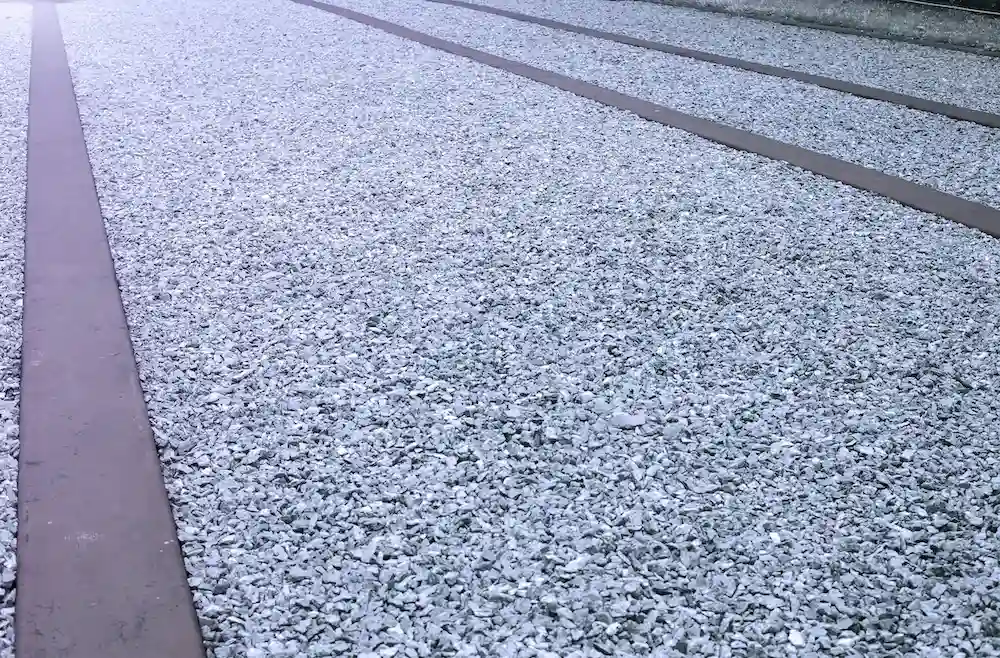
A 4-6 inch compacted base of crushed stone goes in before any concrete. This layer provides drainage below the slab and creates a stable foundation that resists the seasonal movement Central Ohio’s clay soil undergoes through freeze-thaw cycles and wet-dry fluctuations. Mechanical compaction – not hand tamping – is required to achieve the density that holds up under vehicle load over time. This is the step most often shortchanged on low-bid installations and the one most responsible for premature driveway failure.
Formwork and Reinforcement
Forms define the shape and edges of the driveway. Wire mesh or rebar reinforcement goes inside the forms. Control joints are planned and marked at this stage – these are the intentional lines that direct cracking to straight, predictable locations rather than leaving it to form randomly across the surface. A well-planned control joint layout means that any cracking the driveway develops over its life happens in places where it looks and performs best.
Concrete Pour and Finishing
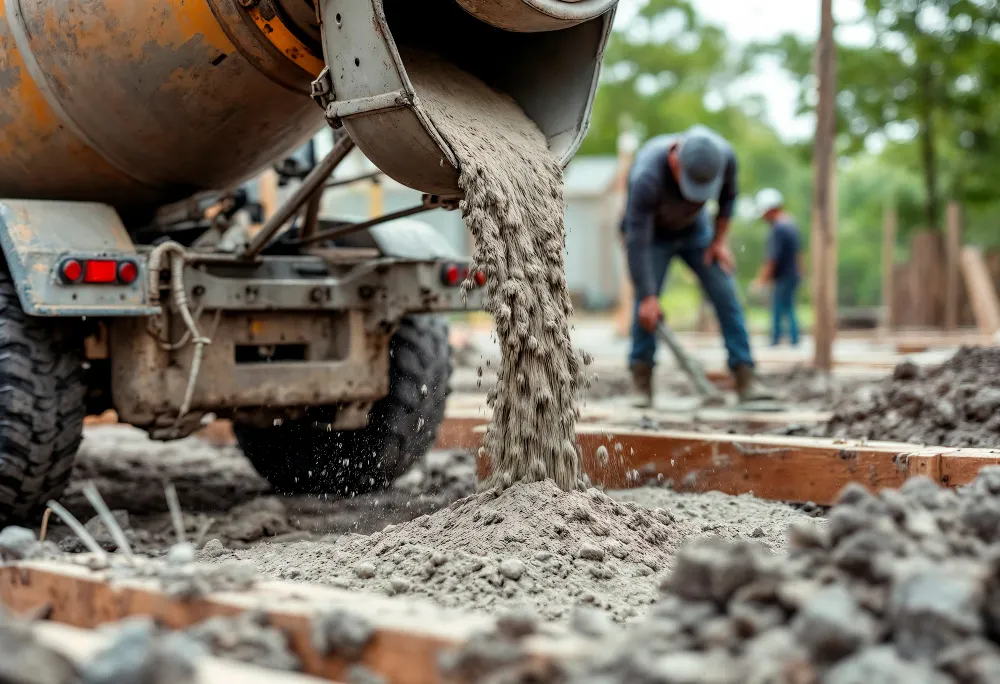
We use air-entrained concrete for all exterior work in Powell and throughout Central Ohio. Air entrainment protects the slab through freeze-thaw cycles by giving water room to expand inside the mix rather than forcing that expansion through the concrete surface. After placement, the slab is screeded, floated, and finished to the specified texture. For decorative finishes, the additional pattern and color work happens during this window while the concrete is still workable.
Sealing
A quality sealer is applied once the concrete has cured adequately. The sealer protects the surface from water infiltration, staining, and winter salt damage – the three main causes of premature driveway deterioration in Central Ohio. We include sealing as part of every installation, and we recommend resealing every 2-3 years for ongoing protection.
Finish Options That Work Well in Powell
Powell homeowners tend to care about how the finished driveway looks alongside their home and landscaping. Here are the main finish options and what each brings to the project:
Broom-Finished Concrete
Clean, durable, slip-resistant, and the most cost-effective option. A quality broom finish ages well on Powell’s newer homes and requires nothing beyond routine sealing and maintenance. For homeowners who want a solid, well-executed driveway without decorative complexity, this is a dependable choice.
Stamped Concrete
Patterns and color that replicate natural stone, slate, or cobblestone elevate a Powell driveway’s appearance significantly – and cost considerably less than actual natural stone. A stamped border around a broom-finished field is a popular middle-ground option in Powell, adding visible design interest at the entry edges without the full cost of a completely stamped surface. Full pattern and color options are available through our decorative concrete services.
Exposed Aggregate
A natural, textured finish that pairs well with Powell’s mix of traditional and transitional home styles. The aggregate type and color can be coordinated with the home’s exterior materials – a detail that makes a significant difference in how the finished driveway reads against the house.
Driveway Width and Layout in Powell
Powell homes often have two or three-car garages, and the driveways should match. A replacement project is the right time to address width if the current configuration doesn’t serve your household well. Standard single-car width is 10-12 feet; a comfortable two-car width runs 18-20 feet. Adding width as part of a replacement costs significantly less per square foot than returning for a separate widening project later, since the base work and mobilization are already happening.
For homes on lots with grade changes near the garage or street, this is also the time to address any transition issues between the driveway, apron, and surrounding grade. We assess all of this during the site visit and build it into the project plan.
What Does a Concrete Driveway Cost in Powell?
Size, finish type, and site conditions drive the final number. A standard broom-finished replacement costs less per square foot than a stamped installation. Width changes, significant grading work, and difficult access add to the scope. For a thorough breakdown of how Columbus-area driveway pricing works, our driveway replacement cost guide is a useful reference. For a number specific to your Powell property, we provide free, itemized estimates with no obligation.
Frequently Asked Questions
Does the City of Powell require a permit for driveway replacement?
Yes. Driveway work in Powell requires a permit, and work involving the apron or right-of-way requires coordination with city engineering. We handle permit applications as part of every project – you don’t need to navigate this process on your own. Permits are pulled before any work starts.
What’s the best time to replace a driveway in Powell?
Late April through October is the reliable installation window in Central Ohio. Spring and early fall both offer good curing conditions. Getting on the schedule during winter puts you at the front of the line when conditions are right in spring – Powell schedules fill quickly once the season opens. Our seasonal timing guide covers when concrete work makes sense in detail.
How long does a Powell driveway installation take?
Most residential driveway replacements run 3-5 days from demolition through pour and finishing. Light vehicle use is typically possible within 7 days of the pour. Full strength is reached at 28 days – we recommend avoiding heavy vehicles until then and give specific guidance based on your project conditions and the time of year.
Ready to replace your Powell driveway? Contact CR Concrete Construction for a free estimate, or call us directly at (614) 679-4338. We’ve been serving Powell and the greater Columbus area for over 30 years.