
Quick Answer: Minor surface cracks, small spalling areas, and isolated damage typically call for repair. But if you’re seeing widespread cracking, significant settling, drainage problems, or damage covering more than 25-30% of your driveway, replacement usually makes more sense. The deciding factors come down to the extent of damage, the driveway’s age, and whether repairs would actually extend its useful life.
That crack spreading across your driveway might be nothing—or it might be telling you something important. Here in Central Ohio, where freeze-thaw cycles, clay soil, and seasonal temperature swings constantly stress concrete, knowing the difference between a minor issue and a major problem can save you thousands of dollars and a lot of headaches.
We’ve assessed hundreds of driveways across Columbus, Westerville, Dublin, and surrounding areas over the past three decades. Here’s what we look for when homeowners ask us that question: repair or replace?
When Repair Makes Sense
Not every driveway problem requires starting over. Some issues are genuinely minor, and addressing them early can extend your driveway’s life by years.
Hairline and Surface Cracks
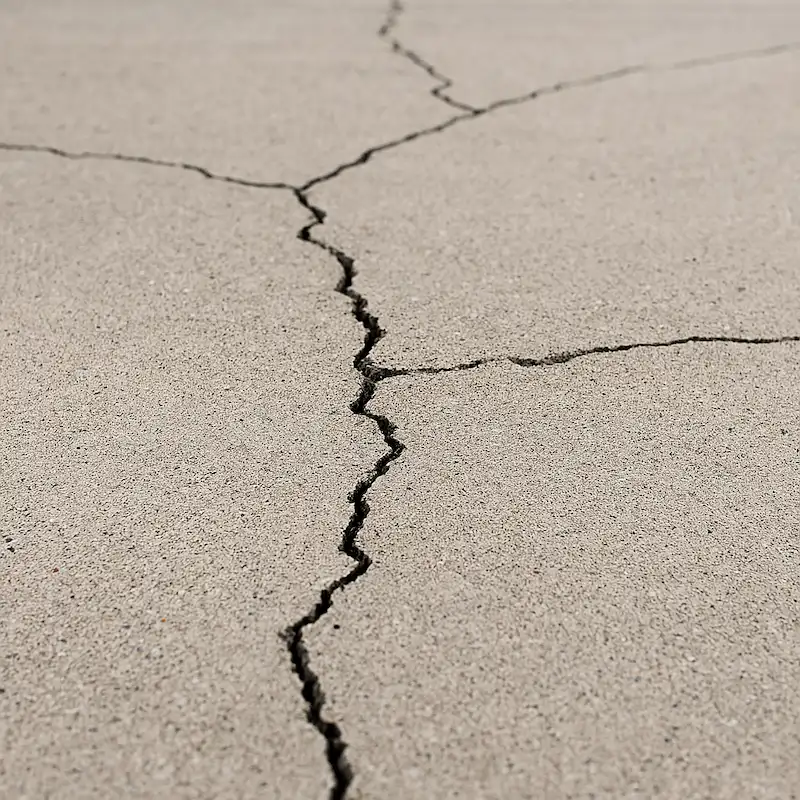
Thin cracks less than a quarter-inch wide are common in Ohio concrete. Temperature fluctuations cause expansion and contraction, and small cracks often appear within the first few years—even on well-installed driveways. These aren’t structural failures.
What matters is catching them before water gets in. Water infiltration leads to bigger problems: it freezes, expands, and turns hairline cracks into something worse. Sealing these cracks promptly is straightforward maintenance, not a sign your driveway is failing.
Isolated Spalling or Scaling
Spalling—where the surface flakes or chips away—often results from deicing salt damage or a finishing issue during original installation. If it’s limited to one area, a patch or overlay might work. We see this frequently in driveways around Upper Arlington and Worthington where road salt gets tracked in during winter.
The repair works if the underlying concrete is still solid. If the damage goes deeper than the surface, that’s a different conversation.
Control Joint Separation
Control joints are supposed to be there—they’re intentional weak points where cracks can form in a controlled way rather than randomly across your slab. Some separation at these joints is normal. Caulking or resealing these joints is routine maintenance, not a repair red flag.
Warning Signs That Point to Replacement
Some damage goes beyond what repairs can realistically fix. Here’s what tells us a driveway has reached the end of its useful life.
Multiple Large Cracks or Pattern Cracking
When cracks exceed half an inch wide, spread across multiple sections, or form a spider-web pattern, the slab’s structural integrity is compromised. You can fill these cracks, but they’ll keep spreading because the underlying problem—usually base failure or excessive settling—isn’t going away.
Pattern cracking, sometimes called “alligator cracking,” is especially telling. It means the concrete is breaking apart systematically, not just cracking at stress points.
Settling and Uneven Sections
Ohio’s expansive clay soil is notorious for causing driveway problems. When one section sinks lower than another—creating trip hazards, water pooling, or visible height differences at slab joints—the base has failed.
Mudjacking or foam leveling can sometimes address minor settling, but significant or ongoing settlement usually indicates the original base wasn’t adequate. Without removing the concrete and properly preparing the subgrade, the settling will continue.
Drainage Problems
Water should flow away from your driveway and your home’s foundation. If you’re seeing puddles that sit for hours after rain, water running toward your garage, or erosion at the driveway edges, the grading is wrong.
Sometimes this happens gradually as soil shifts. Other times it was a problem from installation. Either way, drainage issues don’t fix themselves, and they accelerate concrete deterioration. Replacement lets you correct the grading and slope properly.
Widespread Surface Deterioration
When spalling, scaling, or discoloration covers more than 25-30% of your driveway, patching becomes impractical. You’d end up with a patchwork surface that looks worse than what you started with and still won’t last.
At that point, the cost of multiple repairs approaches replacement cost anyway—and you get a new driveway instead of a heavily patched old one.
The Age Factor
Age matters, but it’s not the only consideration.
A well-installed concrete driveway can last 30 to 40 years. We see driveways from the 1990s still in solid condition across established Columbus neighborhoods. But a poorly installed driveway might fail within a decade.
If your driveway is under 15 years old and showing significant problems, that suggests installation issues—wrong mix, inadequate base, poor drainage, or insufficient reinforcement. Repairs might buy time, but you’re likely looking at ongoing problems.
If your driveway is 25+ years old with moderate wear, it’s probably approaching the end of its natural lifespan. That’s not a failure—that’s a driveway that did its job. Investing in major repairs at that age rarely makes financial sense.
The Real Cost Comparison
We often hear homeowners say they want to “just repair it” to save money. That instinct makes sense—repairs cost less upfront than replacement. But the real question is: will the repair actually solve the problem?
Repairing a driveway that needs replacement is like patching a roof with systemic damage. You’ll spend money now and still need to spend more later. Worse, you might cause additional problems if water continues infiltrating a compromised slab.
When we assess a driveway, we’re honest about what repairs can realistically accomplish. Sometimes a few hundred dollars in crack sealing buys you another decade. Other times, a full driveway replacement is the only option that makes long-term sense.
What a Professional Assessment Includes
When we evaluate a driveway, we’re looking at more than just surface appearance. We check crack patterns and widths to understand what’s causing them, slab elevation and any signs of settling, drainage and how water moves across the surface, the base condition where visible or testable, and overall age and maintenance history.
That assessment takes time, but it’s the only way to give you an honest recommendation. We’d rather tell you a repair will work than sell you a replacement you don’t need—and we’d rather tell you replacement is necessary than have you waste money on repairs that won’t last.
Making the Call for Your Columbus Home
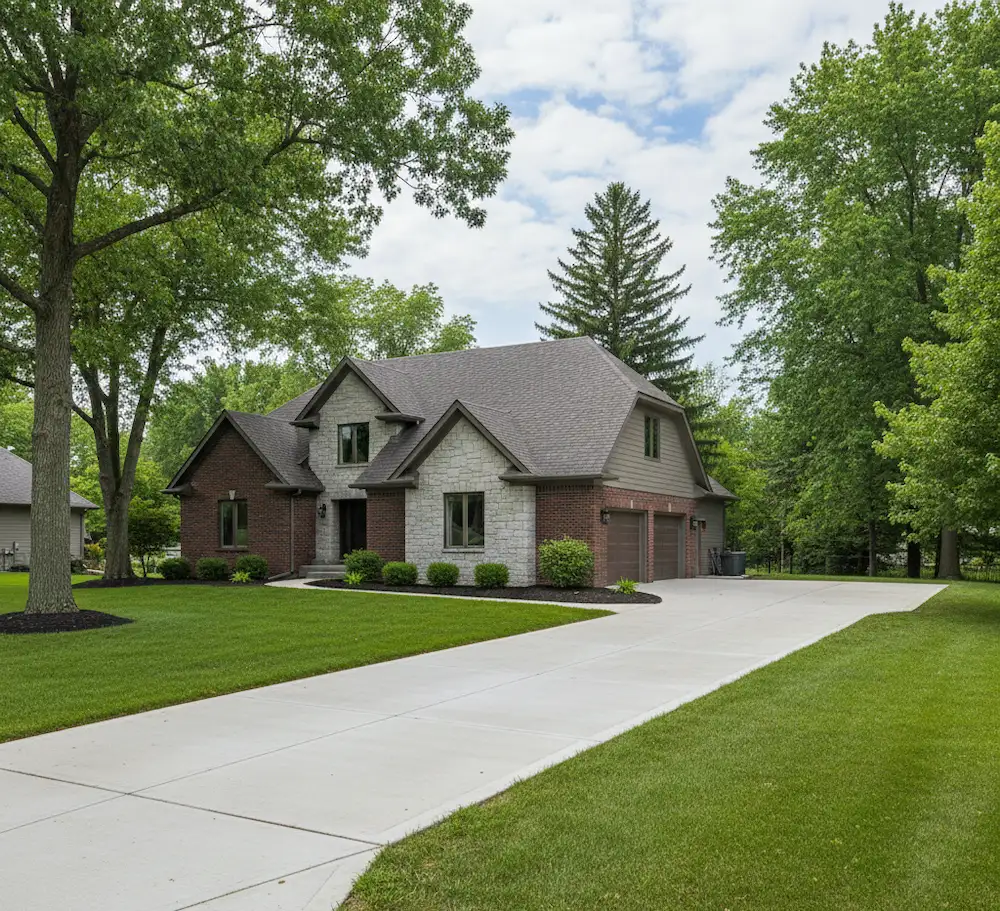
Here’s a simple framework. Consider repair if the damage is isolated to specific areas, cracks are thin and not spreading, the driveway is under 20 years old with otherwise good condition, and addressing the damage now will prevent further deterioration.
Consider replacement if damage covers more than 25-30% of the surface, you see settling, heaving, or drainage issues, the driveway is 25+ years old with multiple problems, or previous repairs haven’t held up.
Still not sure? That’s exactly what a consultation is for. We’ll walk your driveway with you, explain what we’re seeing, and give you a straight answer about your options. Check out our gallery to see examples of driveway projects we’ve completed across Central Ohio.
Frequently Asked Questions
How long do driveway repairs typically last? It depends on the type of repair and underlying conditions. Crack sealing on an otherwise sound driveway can last 5-10 years. Patches on a deteriorating slab might only last 2-3 years before more problems appear.
Can I repair cracks myself? Hairline cracks can be addressed with retail crack fillers as a temporary measure. But if you’re seeing larger cracks or multiple problem areas, a professional assessment helps determine whether DIY repair is appropriate or if you’d be throwing money at a bigger issue.
What’s the best time of year to replace a driveway in Columbus? Spring (April-May) and fall (September-October) offer ideal conditions for concrete work in Central Ohio. Moderate temperatures allow proper curing without the stress of extreme heat or freezing temperatures.
Not sure whether your driveway needs repair or replacement? Contact CR Concrete Construction for a free assessment, or call Carlos at (614) 679-4338 to schedule a consultation.