A concrete driveway installation in Gahanna typically runs 3-5 days from demolition through pour and finishing, with light vehicle use possible by day seven and full strength reached at 28 days. The timeline is straightforward – what drives long-term performance is the work that happens before the concrete truck arrives. Base preparation, drainage, reinforcement, and the right concrete mix for Central Ohio’s freeze-thaw climate are what separate a driveway that looks great at 30 years from one that’s scaling and cracking in 10. Here’s what Gahanna homeowners should know before getting started.
Why Installation Quality Determines Everything in Gahanna
Gahanna sits squarely in Central Ohio’s freeze-thaw zone. Winter temperatures here cycle repeatedly between freezing and thawing – sometimes multiple times in a single week during transitional months. That cycling is hard on concrete that wasn’t built for it. Water infiltrates porous or unsealed surfaces, freezes, expands, and forces the surface layer apart. Over several winters, that process produces the scaling, cracking, and spalling that homeowners call us about.
The good news is that properly installed concrete handles Gahanna’s winters reliably. Air-entrained mix, a compacted gravel base, adequate reinforcement, and timely sealing after installation are the four things that matter most. None of them are complicated – they just need to be done correctly and not skipped to save time or reduce cost.
In our 30+ years serving Gahanna and the greater Columbus area, the pattern is consistent: the driveways that call us back for repairs are the ones where one of these steps was shortchanged. The ones that don’t call us back are the ones where everything was done right from the start.
Is Your Gahanna Driveway Due for Replacement?
Repair makes sense in some situations. Replacement makes sense in others. The distinction matters because patching a driveway that has underlying base failure just moves the problem around – it doesn’t solve it.
These are the signs that point toward replacement rather than repair: settled panels with height differences between sections, widespread cracking across multiple areas rather than isolated cracks, spalling or scaling across large surface areas, a driveway that’s been patched repeatedly but keeps developing new damage, or concrete that’s crumbling at the edges. Any of these patterns typically indicates the base has failed or the slab has deteriorated past what repair can address durably.
Our driveway replacement vs. repair guide walks through the assessment in more detail. We also give a direct, honest recommendation during every free estimate – if repair is the right answer for your situation, we’ll say so.
The Full Installation Process for a Gahanna Driveway
Here’s what each stage of the project involves and why it matters:
Free Estimate and Site Assessment
We visit the property, evaluate the existing driveway condition and site drainage, discuss any layout or width changes the homeowner wants to make, and walk through finish options. For Gahanna properties, we also confirm permit requirements with the City of Gahanna before finalizing scope – driveway work here requires a permit, and any work touching the apron or right-of-way involves city coordination. We handle permit applications as part of every project.
Demolition and Removal
Existing concrete is broken up and hauled off the property. We don’t pour over old material – doing so creates an unstable base that causes the new slab to fail along the same lines as the old one. Demo debris is removed the same day in most cases, so you’re not left with broken concrete sitting in your driveway for days.
Excavation and Grading
The area is excavated to the correct depth and graded to direct water away from the house and off the driveway surface. Drainage problems caused by poor grading show up as cracking, base erosion, and settling within a few years. Getting the grade right at this stage is one of the least visible steps in the process and one of the most important for long-term performance.
Compacted Gravel Base
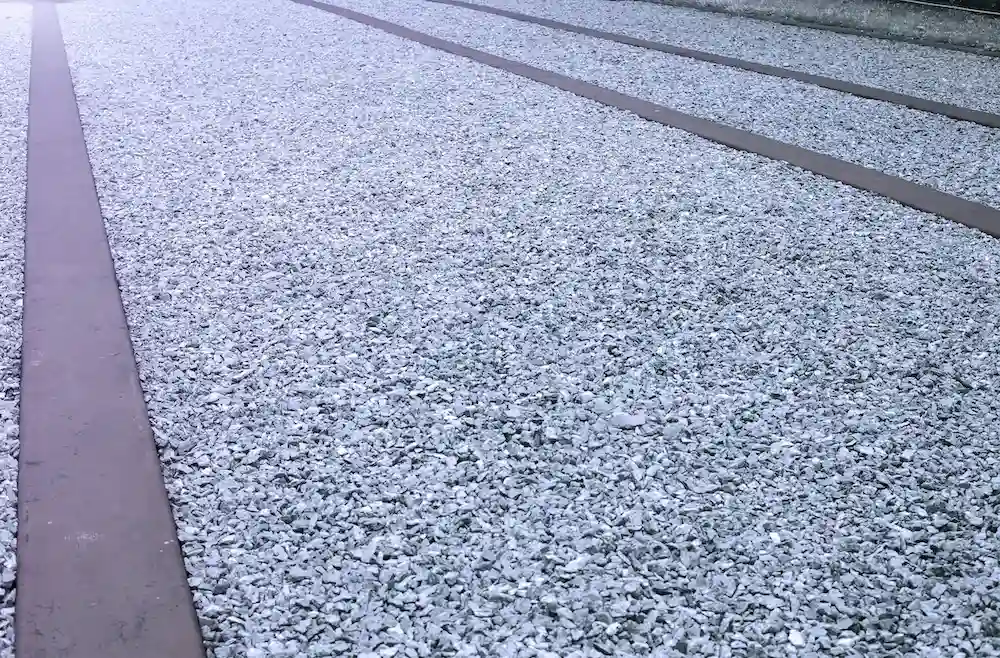
A compacted base of 4-6 inches of crushed stone goes in before any concrete is placed. Gahanna’s clay-heavy soil holds water rather than draining it, which means the base layer does two jobs: it provides drainage that prevents water from building up under the slab, and it creates a stable foundation that resists the seasonal movement clay soil undergoes as it wets, dries, freezes, and thaws. Mechanical compaction – not hand tamping – is required to do this step correctly.
Formwork and Reinforcement
Forms define the driveway’s shape and edges. Wire mesh or rebar is placed inside the forms before the pour. Control joints are planned at this stage – these are the intentional lines that guide cracking to happen in straight, predictable locations rather than randomly across the surface. A driveway without control joints will crack over time; the question is just where. Well-placed joints mean any cracking happens where it’s least visible and least problematic.
Concrete Pour and Finishing
We use air-entrained concrete for all exterior work in Gahanna and throughout Central Ohio. Air entrainment is non-negotiable for outdoor concrete here – it’s what protects the slab through repeated freeze-thaw cycles by giving water room to expand inside the mix rather than forcing that expansion through the concrete itself. After placement, the slab is screeded, floated, and finished to the specified texture – broom finish for standard installations, or additional decorative steps for stamped or aggregate work.
Curing and Sealing
A curing compound is applied after finishing to retain moisture in the slab during the early cure period. Once adequately cured, a quality sealer is applied to protect the surface from water infiltration, staining, and winter salt exposure. Sealing is the most effective single maintenance step for extending driveway life in Columbus’s climate – and it’s included as part of our installation process, not an upsell.
Finish Options for Gahanna Driveways
The surface finish is the most visible decision in a driveway project. Here’s what’s available and what tends to work well in Gahanna:
Standard Broom Finish
Clean, durable, and the most cost-effective option. A quality broom-finished driveway ages well, provides consistent slip resistance in all weather, and suits Gahanna’s mix of traditional and contemporary homes. For homeowners who want a solid, well-executed driveway without decorative complexity, this is the right choice.
Stamped Concrete
Patterns and color that replicate natural stone, slate, or cobblestone give a Gahanna driveway a premium appearance at a fraction of natural stone pricing. A stamped border around a broom-finished field is a popular option – decorative detail at the edges where it gets the most attention, with a simpler and more affordable field in the center. The full range of stamped patterns and color combinations is available through our decorative concrete services.
Exposed Aggregate
A natural, textured finish with excellent traction and an understated appearance that works well across a range of home styles. Aggregate type and color can be selected to complement your home’s exterior – lighter aggregates for lighter homes, warmer tones for brick exteriors.
Driveway Width: Worth Reconsidering at Replacement
A driveway replacement is the right time to address width if the current driveway doesn’t suit how you use your property. Adding width after the fact is a separate mobilization with its own demo, base, and pour costs. Doing it as part of a replacement project costs significantly less per square foot because the setup work is already happening.
Standard single-car width is 10-12 feet. A comfortable two-car width runs 18-20 feet. If you have a two-car garage and a 10-foot driveway, that gap is worth addressing now.
What Does a Concrete Driveway Cost in Gahanna?
Size, finish type, and site conditions drive the final number. A standard broom-finished replacement costs less per square foot than a stamped installation. Width changes, significant grading work, and difficult equipment access all affect the total scope. Our driveway replacement cost guide covers how pricing works in the Columbus market in detail. For a number specific to your Gahanna property, we provide free, itemized estimates with no obligation.
Frequently Asked Questions
Does the City of Gahanna require a permit for driveway replacement?
Yes. Driveway work in Gahanna requires a permit, and apron work involves coordination with city engineering requirements. We handle permit applications as part of every project – this is included in our process, not something you need to manage separately.
When is the best time of year to install a driveway in Gahanna?
Late April through October is the reliable installation window in Central Ohio. Spring and early fall offer the best curing conditions. If you’re planning a project, getting on the schedule during winter puts you at the front of the line when conditions turn favorable in spring. Our seasonal timing guide covers this in full detail.
How long before I can park on my new driveway?
Light passenger vehicles can typically use the driveway within 7 days of the pour. Full strength is reached at 28 days – we recommend avoiding heavy vehicles like trucks, RVs, or trailers until then. We give specific guidance based on your project conditions and the time of year.
Ready to replace your Gahanna driveway? Contact CR Concrete Construction for a free estimate, or call us at (614) 679-4338. We’ve been serving Gahanna and the greater Columbus area for over 30 years.