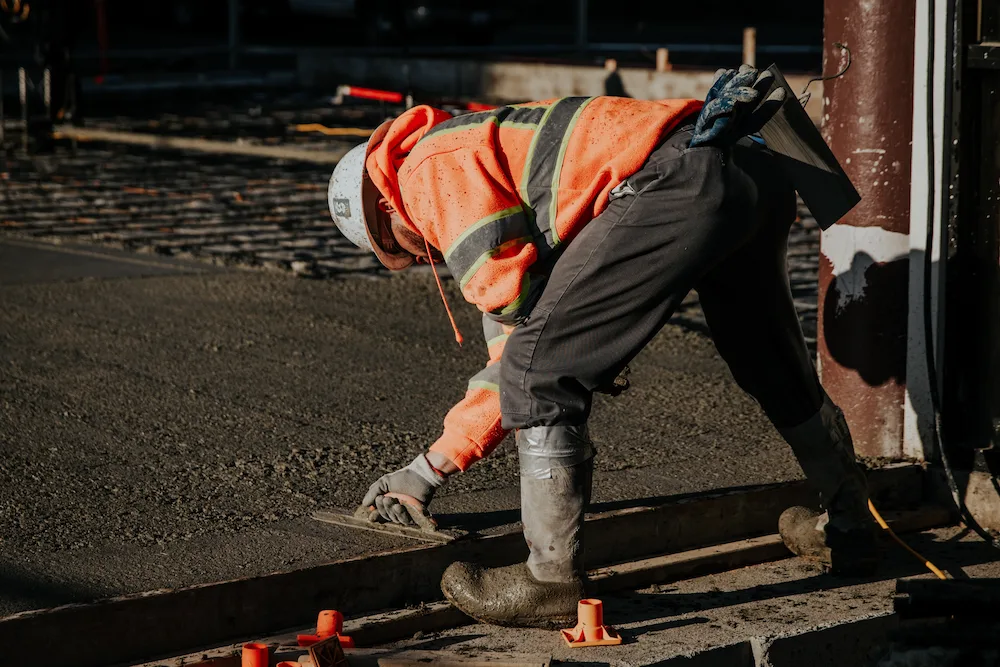
Concrete resurfacing applies a fresh layer of cement-based material over an existing slab that’s worn or weathered but still structurally sound – restoring the surface appearance and adding a new protective layer without the cost and disruption of full demolition and replacement. In Columbus, resurfacing makes sense in specific situations, and understanding when it works and when it doesn’t saves homeowners from investing in a fix that won’t hold.
What Concrete Resurfacing Actually Is
Resurfacing isn’t patching and it isn’t replacement. It’s a distinct process where a thin overlay – typically 1/4 to 1/2 inch thick – of a polymer-modified cement mixture is applied to a prepared existing slab. When done correctly on the right candidate slab, the overlay bonds to the existing concrete, creates a fresh surface, and can be textured, colored, or stamped for a decorative finish.
The key phrase is “the right candidate slab.” Resurfacing works by bonding a new surface to an existing one. If the existing slab is unstable, cracked through, settled, or has a failed base causing movement, no overlay will stay bonded to it for long. The surface will eventually crack and delaminate along the same fault lines as the concrete beneath it.
This is why the assessment before any resurfacing project matters as much as the application itself. A slab that looks rough and worn on the surface may be a good resurfacing candidate. A slab that looks similar but has hidden base failure is not – and applying a resurfacer to the wrong slab is an expensive mistake.
When Resurfacing Makes Sense in Columbus
Concrete resurfacing is the right choice when all of these conditions are true: the existing slab is structurally intact, the base beneath it is stable and not causing movement, the surface damage is cosmetic rather than structural, and the slab is level with no settled sections creating height differences.
The situations where we see resurfacing work well in Columbus:
Surface Scaling From Freeze-Thaw or Salt Damage
Driveways and patios that have surface scaling – where the top layer has flaked away leaving a rough, pitted surface – but are otherwise stable and level are often good resurfacing candidates. The scaling is cosmetic damage to the surface layer. If the concrete beneath it is sound and the base is stable, a polymer-modified overlay restores the surface appearance and provides a fresh protective layer going forward.
Faded or Dated Decorative Concrete
Stamped or colored concrete that has lost its color or sealer but remains structurally intact can be resurfaced with a new decorative overlay. This is one of the most cost-effective ways to refresh a patio or pool deck that looks worn but doesn’t need to be replaced. The new overlay can be textured and colored to match or update the original finish.
Pool Decks With Surface Wear
Pool decks see heavy use, constant water exposure, and UV stress. Surface wear is common even on well-maintained pool decks. If the underlying slab is sound, resurfacing with a slip-resistant texture overlay restores both appearance and traction without full demolition – a meaningful cost saving on what can be a large surface area.
Garage Floors and Interior Slabs
Garage floors that are dusty, stained, or showing surface wear are good resurfacing candidates. Interior slabs don’t face freeze-thaw stress, which means the bond between overlay and existing concrete is under less stress. Epoxy coatings and microtoppings are common overlay systems for garage floors, providing both protection and a cleaner finished appearance.
When Resurfacing Is Not the Right Answer
Understanding where resurfacing fails is just as important as knowing where it works. These conditions disqualify a slab from resurfacing as a reliable long-term solution:
Structural Cracking
Cracks that run through the full depth of the slab, cracks with vertical displacement between the two sides, and cracks that are actively moving with temperature and moisture changes will reflect through any overlay applied over them. This is called reflective cracking, and it happens because the crack movement in the slab below puts stress on the overlay above. A resurfacer cannot bridge active structural movement.
Settled or Heaved Sections
Sections of a driveway or patio that have settled relative to adjacent sections create height differences that are a trip hazard and a structural problem. A resurfacer cannot raise a settled section or fill a height difference of more than a fraction of an inch without creating an unstable ramp. Settlement indicates base failure, which means the problem is below the slab – not on its surface.
Delaminating or Spalling Concrete
When the surface layer is actively separating from the concrete below – not just flaking at the surface but coming away in larger chunks – the bond between layers has failed. Applying an overlay to concrete in this condition doesn’t create a stable substrate for the new material to bond to.
Widespread Base Failure
If the base beneath a slab has eroded, settled unevenly, or was never properly prepared, the slab will continue moving regardless of what’s done to the surface. Any overlay applied over a slab on a failed base will eventually crack and delaminate as the slab below it continues to move. In these cases, full removal and reinstallation with proper base preparation through our concrete installation services is the only fix that lasts.
The Resurfacing Process in Columbus
When resurfacing is the right choice for a Columbus property, here’s what the process involves:
Surface Preparation
This is the most critical step in any resurfacing project. The existing concrete surface must be thoroughly cleaned – oil, grease, dirt, and any existing sealer or coating that would prevent the overlay from bonding needs to be removed. Pressure washing handles most surface contamination. Existing sealers may require chemical stripping or mechanical abrading to ensure good overlay adhesion.
Any cracks that are present get assessed and addressed appropriately before the overlay goes on. Stable, non-moving cracks can be filled with a flexible crack filler. Active cracks that will continue moving need a different approach – or may disqualify the slab from resurfacing entirely.
Primer Application
A bonding primer is applied to the prepared concrete surface before the overlay. This primer creates a chemical bond between the old concrete and the new overlay material. Skipping the primer – or applying it to an inadequately prepared surface – is the most common cause of resurfacing delamination.
Overlay Application
The overlay material is mixed and applied to the primed surface. Thickness varies by product and application – most residential resurfacing overlays run 1/4 to 3/8 inch thick. The material is spread evenly, then finished with the specified texture. For decorative applications, stamping or texturing happens during the application window while the overlay is still workable.
Sealing
Once the overlay has cured, a sealer is applied to protect the new surface. This is especially important in Columbus’s climate – the overlay needs the same freeze-thaw protection that any exterior concrete does. Resealing every 2-3 years keeps that protection intact going forward.
Resurfacing vs. Replacement: How to Decide
The decision comes down to what’s driving the problem. Surface-only deterioration on a structurally sound, stable slab – resurfacing is worth considering. Structural cracking, settlement, base failure, or deterioration that extends beyond the surface layer – replacement is the right answer and resurfacing is money spent on a temporary fix.
We assess the specific condition of the slab during every free estimate and give an honest recommendation. If resurfacing is the right call, we’ll say so. If the slab needs replacement, we’ll explain exactly why rather than just pushing the larger project. Our guide to proper concrete patching and our replacement vs. repair guide cover the broader decision framework in more detail.
Frequently Asked Questions
How long does a concrete resurfacing last in Columbus?
On a properly prepared, structurally sound slab, a quality resurfacing overlay in Columbus can last 8-15 years with regular sealing and maintenance. Surfaces that see heavy traffic or heavy winter salt use at the lower end of that range; well-maintained decorative overlays on patios or pool decks at the higher end. Resurfacing won’t outlast a properly installed new slab, but it extends the life of a sound existing one at a fraction of replacement cost.
Can a resurfaced driveway handle Columbus winters?
Yes, when the overlay is a polymer-modified mix designed for exterior use and is properly sealed. The polymer content improves flexibility and freeze-thaw resistance compared to plain cement overlays. Using the same winter care practices that apply to any concrete – avoiding rock salt, sealing on schedule – is important for resurfaced driveways just as for new concrete.
Is resurfacing less expensive than replacement?
Typically yes – resurfacing costs less per square foot than full demolition and replacement when the slab is a good candidate. The cost advantage narrows when extensive surface preparation is required or when cracks need significant remediation before the overlay can go on. For a side-by-side comparison specific to your situation, the free estimate covers both options when both are viable.
Not sure whether your Columbus driveway or patio needs resurfacing or replacement? Contact CR Concrete Construction for a free assessment, or call us at (614) 679-4338. We serve Columbus and surrounding Central Ohio communities.