A concrete patio in Westerville adds usable outdoor living space that holds up through Central Ohio winters, requires minimal upkeep, and can be finished in styles that range from clean and simple to custom decorative work that rivals natural stone. The key is getting the planning right before anything gets poured – sizing, drainage, finish selection, and base preparation all determine how the patio performs over the long run. Here’s what Westerville homeowners should know before starting the process.
Why Concrete Is a Strong Choice for Westerville Patios
Westerville homeowners invest in their properties, and a concrete patio reflects that investment well. Concrete is one of the most durable outdoor surfaces available in Central Ohio – when installed correctly with a proper base and air-entrained mix, it handles the freeze-thaw cycles that damage less-prepared materials every winter.
It’s also one of the most versatile options on the market. The same material that produces a straightforward broom-finished slab can be stamped, colored, and textured to look like natural flagstone, cobblestone, or slate. That flexibility means you’re not locked into one aesthetic – the finish can complement your home’s exterior, your landscaping, and how you plan to use the space.
In our 30+ years working throughout Columbus and Westerville, we’ve found that homeowners who invest in a well-planned concrete patio use their backyard more. The surface is comfortable underfoot, easy to clean, and doesn’t require the annual maintenance that wood decks demand.
Patio Finish Options for Westerville Homes
Choosing the right finish is one of the most enjoyable parts of the planning process. Here’s a breakdown of what’s available through our decorative concrete services and what works well in Westerville’s residential settings:
Broom-Finished Concrete
The standard finish – a consistent texture created by dragging a broom across the wet surface. It’s slip-resistant, ages well, and is the most cost-effective option. For homeowners who want a clean, low-key patio that lets the landscaping and furniture do the talking, a quality broom finish is a smart choice. It also works well as a base for outdoor rugs and furniture arrangements that change seasonally.
Stamped Concrete
Patterns pressed into the concrete before it cures can replicate the look of natural stone, brick, cobblestone, or wood plank. Combined with integral color or color hardener and an antiquing release, stamped concrete produces a surface that’s visually rich and genuinely distinctive. It costs more than plain concrete but significantly less than natural stone – and it performs as a single, stable slab rather than individual units that can shift over time.
Popular patterns in Westerville include ashlar slate, random flagstone, and cobblestone borders around a broom-finished field. The pattern and color choices can be tailored to match your home’s exterior materials and the overall feel of your yard.
Exposed Aggregate
The top layer of cement paste is washed away before it fully cures, revealing the natural stone aggregate below. The result is a textured, natural-looking surface with excellent slip resistance – particularly useful on patios that see wet conditions or are used by children and older adults. Exposed aggregate has an understated quality that complements traditional Westerville homes well, and it looks better with age rather than fading.
Colored Concrete
Color can be incorporated into any finish through integral pigments mixed into the concrete before the pour, through surface-applied color hardeners, or through stains applied after curing. Warm earth tones – tans, buffs, and terracottas – are consistently popular in Westerville for how naturally they blend with landscaping and brick or stone exterior homes.
Getting the Patio Size Right
One of the most common things homeowners tell us after a patio is complete is that they wish they’d gone a bit bigger. It’s easy to underestimate how much space furniture, a grill, and people actually need to feel comfortable.
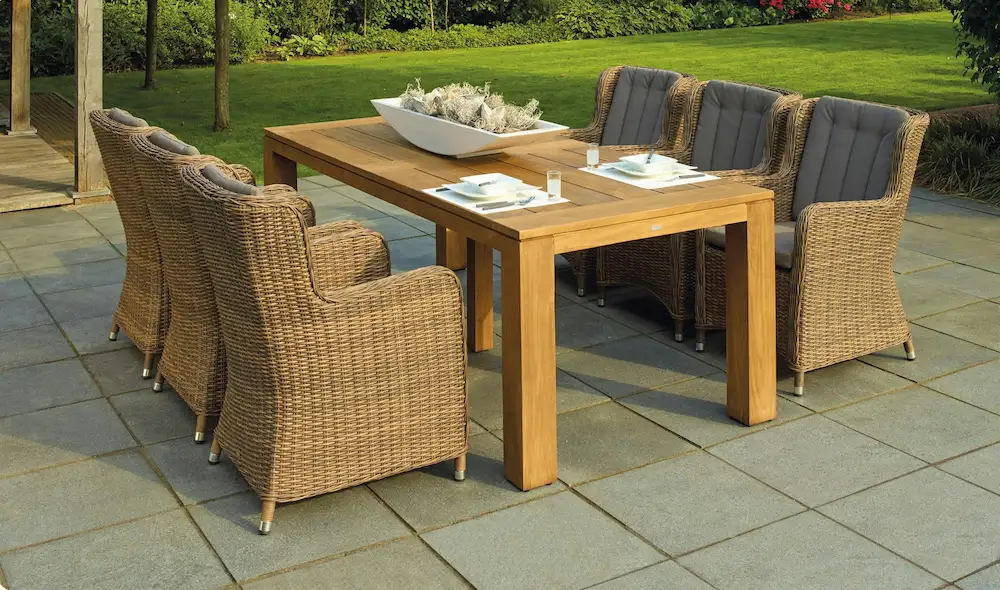
A patio intended for a dining set with four chairs needs at least 12 by 14 feet to feel usable – not cramped. Add a grill station on the side and you need more room. Add lounge seating and the footprint grows again. Before we finalize any patio dimensions, we walk through the homeowner’s actual intended use – furniture layout, traffic flow, connection to the house – so the size makes sense for how the space will actually function.
This conversation costs nothing and saves a lot of regret. A patio that’s sized correctly from the start doesn’t need to be expanded two years later.
What Proper Installation Involves
The work that happens below the surface is what determines how long a patio lasts in Westerville’s climate. Here’s what each step involves and why it matters:
Excavation and Grading
The patio area is excavated to the correct depth and graded to direct water away from the house and off the surface. In Westerville, as throughout Central Ohio, clay-heavy soil holds water rather than draining it naturally. If the grade doesn’t actively move water away from the slab, that water sits under and around the concrete – accelerating freeze-thaw damage and causing settling over time.
Compacted Gravel Base
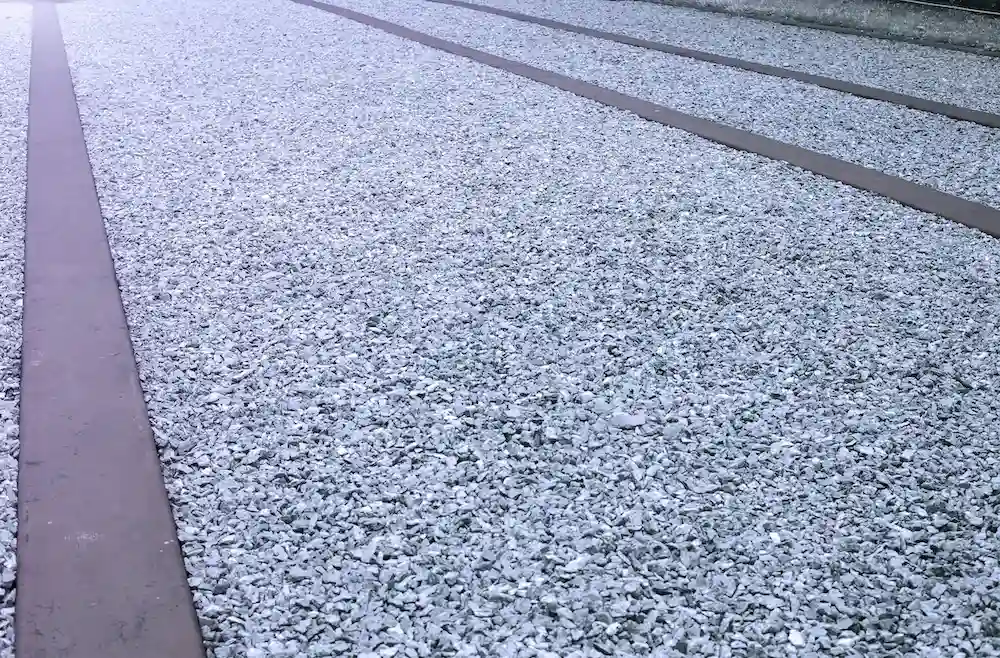
A compacted base layer of crushed stone provides drainage and a stable, consistent foundation. This is the step most often skipped or undersized on low-bid patio installations, and it’s where most premature failures start. Mechanical compaction – not hand tamping – is required to do this step correctly.
Reinforcement
Wire mesh or rebar is placed inside the forms before the pour. Concrete handles compressive load well on its own, but needs reinforcement to resist the tensile forces – pulling and bending – that cause cracking under ground movement and load.
Air-Entrained Concrete
Every exterior slab we pour in Westerville and throughout Columbus uses air-entrained concrete. The microscopic air voids in the mix give water room to expand when it freezes, protecting the slab from freeze-thaw damage. This is not optional for outdoor concrete in Central Ohio.
Control Joints
Tooled or cut into the slab at planned intervals, control joints guide cracking to happen in predictable, straight lines rather than randomly across the surface. All concrete moves with temperature and moisture changes – control joints manage that movement rather than trying to prevent it.
Permits for Patios in Westerville
Whether your patio requires a permit in Westerville depends on its size and proximity to property lines and structures. Ground-level patios below a certain square footage are often exempt, but setback requirements apply, and any patio attached to the house may trigger a permit requirement.
As a licensed and bonded contractor serving Westerville and surrounding communities, we handle permit research and applications as part of the project. If a permit is required, we pull it before work starts – this protects you if you ever sell the property or if the work is ever questioned.
Connecting the Patio to Your Outdoor Space
A patio works best when it’s part of a cohesive outdoor plan rather than a standalone slab. Some combinations that come together well in Westerville backyards:
A patio connected to the house by a concrete walkway, so there’s a defined path that doesn’t route traffic through the lawn. A low decorative retaining wall or concrete border along the patio edge, which defines the space visually and holds back any adjacent grade. A patio designed with a fire pit area built in from the start, rather than added later when it doesn’t quite fit the footprint.
Our full hardscaping and outdoor living services cover all of these elements. Handling everything under one project keeps the design consistent and eliminates the coordination headaches that come with multiple contractors.
How Much Does a Concrete Patio Cost in Westerville?
Size, finish type, and site conditions are the main cost drivers. A plain broom-finished patio runs less per square foot than a stamped and colored installation. Exposed aggregate falls in between. Difficult site access, significant grading work, or an existing surface that needs demolition add to the total.
We provide free, detailed estimates for all patio projects in Westerville and the broader Columbus area – no obligation, no pressure, just a clear number based on your specific yard and goals.
Frequently Asked Questions
How long does a concrete patio installation take in Westerville?
Most residential patio installations take 2-4 days from start to finish. Site prep and forming happen first, then the pour and finishing. Foot traffic is typically fine within 24-48 hours after the pour, and the patio can handle furniture and normal use within a week. Full cure to maximum strength takes 28 days.
Does concrete get too hot to walk on in Ohio summers?
Plain gray concrete can get warm on direct-sun summer afternoons. Lighter colored concrete – buff, tan, or cream tones – absorbs less heat and stays meaningfully cooler underfoot. If you’re planning a patio that will see a lot of barefoot summer use, color choice is worth factoring into the design conversation.
How often does a concrete patio need to be resealed?
Every 2-3 years is the standard recommendation for exterior concrete in Columbus’s climate. You can tell it’s time to reseal when water stops beading on the surface and starts soaking in instead. Resealing before winter is ideal – it protects the slab through the freeze-thaw season when damage risk is highest.
Ready to plan your Westerville patio project? Contact CR Concrete Construction for a free estimate, or call us at (614) 679-4338. We’ve been serving Westerville and the greater Columbus area for over 30 years.