Quick Answer: Most concrete driveway cracks in Columbus result from freeze-thaw cycles, Ohio’s expansive clay soil, poor base preparation, and inadequate drainage. Some hairline cracking is normal and doesn’t indicate structural problems, but widespread cracking usually points to installation issues or soil movement. Proper base prep, air-entrained concrete, and control joints prevent most serious cracking.
You walk out to your driveway one morning and notice a crack you swear wasn’t there last week. Is it a problem? Will it spread? Do you need to replace the whole driveway?
These are questions we hear constantly from Columbus homeowners. Cracking is the most common concern people have about concrete driveways, and for good reason. But not all cracks are created equal, and understanding what causes them helps you know when to worry and when to relax.
We’ve installed and repaired hundreds of driveways across Franklin County since 1991, and we’ve learned exactly what causes cracking in Central Ohio’s unique conditions. Here’s what you need to know.
The Biggest Culprit: Freeze-Thaw Cycles
Central Ohio’s weather is brutal on concrete. We get freezing winters and hot summers, and it’s the constant cycling between the two that does the damage.
Here’s what happens: water seeps into tiny pores or small cracks in the concrete. When temperatures drop below freezing, that water turns to ice and expands. Ice takes up about 9% more volume than liquid water, which creates tremendous pressure inside the concrete.
Over one winter season, this might happen dozens of times. Over years, it adds up. The concrete can only take so much expansion and contraction before it starts to crack.
That’s why air-entrained concrete is critical for driveway installations in Columbus. Those microscopic air bubbles give expanding ice somewhere to go instead of fracturing the concrete from within. Not all contractors use air-entrained mixes because they cost slightly more and require more careful finishing. That’s a mistake that homeowners pay for later.
Ohio’s Expansive Clay Soil
If you’ve lived in Central Ohio for any length of time, you know our soil is challenging. We have heavy clay soil that expands when wet and shrinks when dry. That movement puts stress on anything sitting on top of it—including your driveway.
When the soil beneath your driveway shifts, the concrete has to move with it. Concrete is rigid, so instead of flexing, it cracks. This is especially common during spring when the ground is saturated from snowmelt, or during summer droughts when the clay shrinks dramatically.
We see this frequently in Westerville, Powell, and other areas across Franklin County. The solution is proper base preparation—excavating deep enough to get below the active soil layer and replacing it with compacted gravel that doesn’t expand and contract with moisture.
Poor Base Preparation Guarantees Cracking
This is the number one cause of premature driveway failure we see. If the base isn’t properly prepared, the driveway is doomed from day one.
A proper base means excavating to the correct depth (typically 8-12 inches depending on soil conditions), filling with quality compacted gravel, ensuring proper drainage and slope, and compacting in layers to prevent settling.
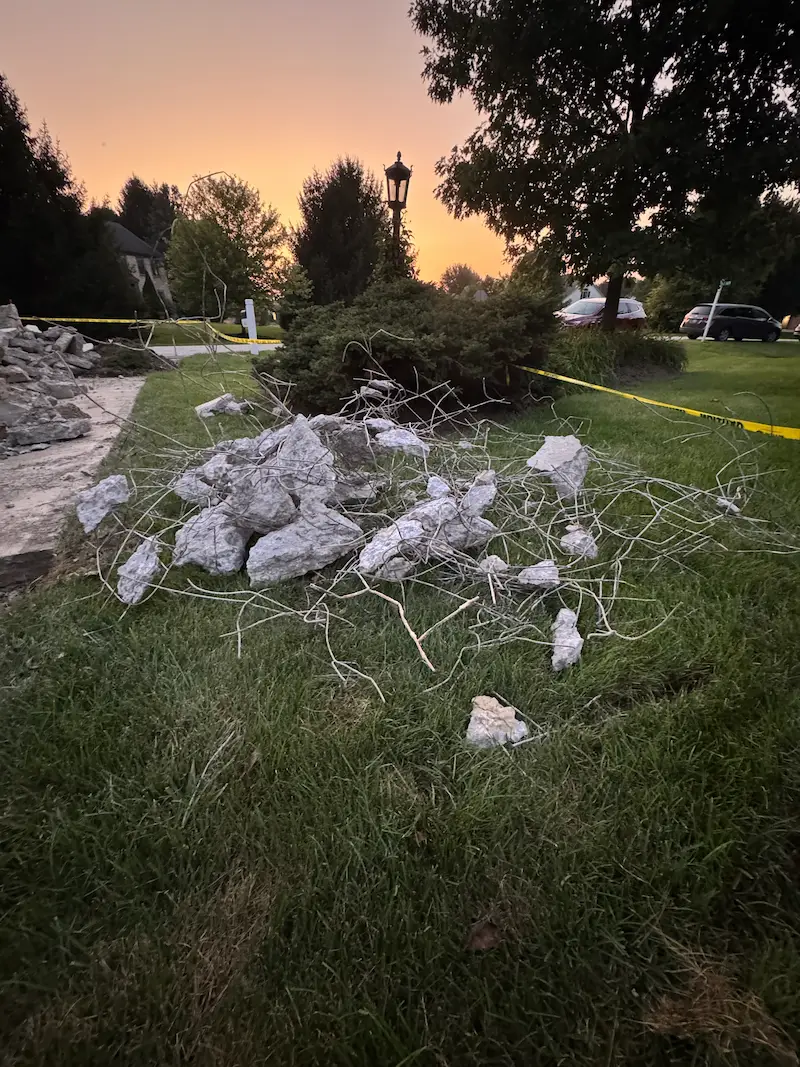
Skipping any of these steps saves the contractor time and money but costs you thousands in premature replacement. We’ve torn out driveways in Dublin and New Albany that were less than 10 years old because the base wasn’t done right.
You can’t see the base once the concrete is poured, which is why choosing a contractor with a proven track record matters. Our work speaks for itself in our project gallery.
Drainage Issues Cause Subsurface Problems
Water is concrete’s enemy. When water pools on your driveway or seeps underneath, it undermines the base material and creates voids where the concrete isn’t fully supported.
What happens then? The concrete spans across those voids like a bridge. Eventually, under the weight of vehicles, it cracks.
Proper drainage means grading the driveway with a slight slope (typically 1-2% grade) so water flows off rather than pooling, ensuring downspouts and gutters direct water away from the driveway, and in some cases, installing subsurface drainage if the site has water table issues.
We evaluate drainage carefully during our initial site assessments. Carlos has seen too many driveways fail because drainage was an afterthought instead of a priority.
Control Joints: Where Cracks Are Supposed to Form
Here’s something many homeowners don’t realize: some cracking is intentional.
Control joints are cuts made in fresh concrete (or saw-cut shortly after) that create a weak point where the concrete will crack as it shrinks during curing. The goal is to control where cracks appear rather than letting them form randomly across your driveway.
We place control joints every 8 to 10 feet in a grid pattern. When done properly, these joints are barely noticeable and keep random cracking to a minimum.
Some contractors skip control joints to save time. Bad idea. Without them, you get random spider-web cracking across the entire slab.
Temperature and Curing Conditions
The conditions when concrete is poured and cured affect its long-term durability. Pouring concrete when it’s too hot, too cold, or when rain is in the forecast all increase the likelihood of cracking.
Concrete poured in extreme heat can cure too quickly and develop surface cracks. Concrete poured when temperatures are near freezing won’t cure properly and will be weak. That’s why spring and fall are ideal for concrete work in Columbus—moderate temperatures allow for proper curing.
Rushing the curing process by not keeping the concrete moist during the first few days also leads to cracking. Proper curing takes patience, but it makes the difference between a driveway that lasts 20 years and one that lasts 40.
What You Can Do to Prevent Cracking
While some factors are out of your control, there’s plenty you can do to minimize cracking risk.
Choose a Contractor Who Does It Right
This is the most important decision you’ll make. Look for contractors who have been in business for years (we’ve been at this since 1991), are licensed and insured, use air-entrained concrete mixes, take base preparation seriously, and can show you examples of their work.
Don’t make your decision based solely on price. The cheapest bid usually means corners will be cut somewhere—and base prep is the first thing to go.
Seal Your Driveway Regularly
Sealing every 2 to 3 years protects against moisture infiltration and gives you extra insurance against freeze-thaw damage. It’s not absolutely required, but it adds years to your driveway’s life.
Manage Water Properly
Make sure your gutters and downspouts direct water away from your driveway. If you notice pooling water, address it before it becomes a bigger problem. Sometimes a simple adjustment to grading or adding a drainage solution can prevent expensive damage.
Use the Right Deicing Products
Rock salt accelerates surface deterioration on concrete. Switch to sand or calcium-based deicers for winter traction. Your driveway will last longer, and you’ll avoid the surface scaling that salt causes.
When Cracks Are Normal vs. When to Worry
Not every crack means disaster. Here’s how to know the difference.
Normal, Non-Structural Cracks
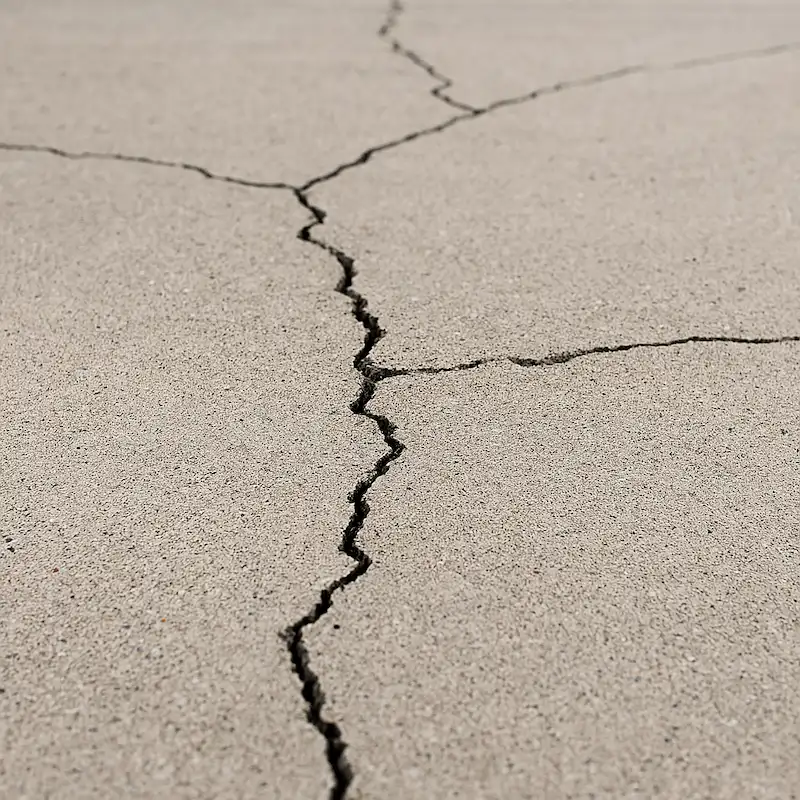
Hairline cracks less than 1/8 inch wide are common and don’t indicate structural problems. They often appear during the first year as the concrete fully cures and settles. Cracks along control joints are exactly what’s supposed to happen—the concrete is cracking where it’s designed to crack.
These types of cracks don’t require immediate action, though sealing them can prevent water infiltration and keep them from widening over time.
Problematic Cracks That Need Attention
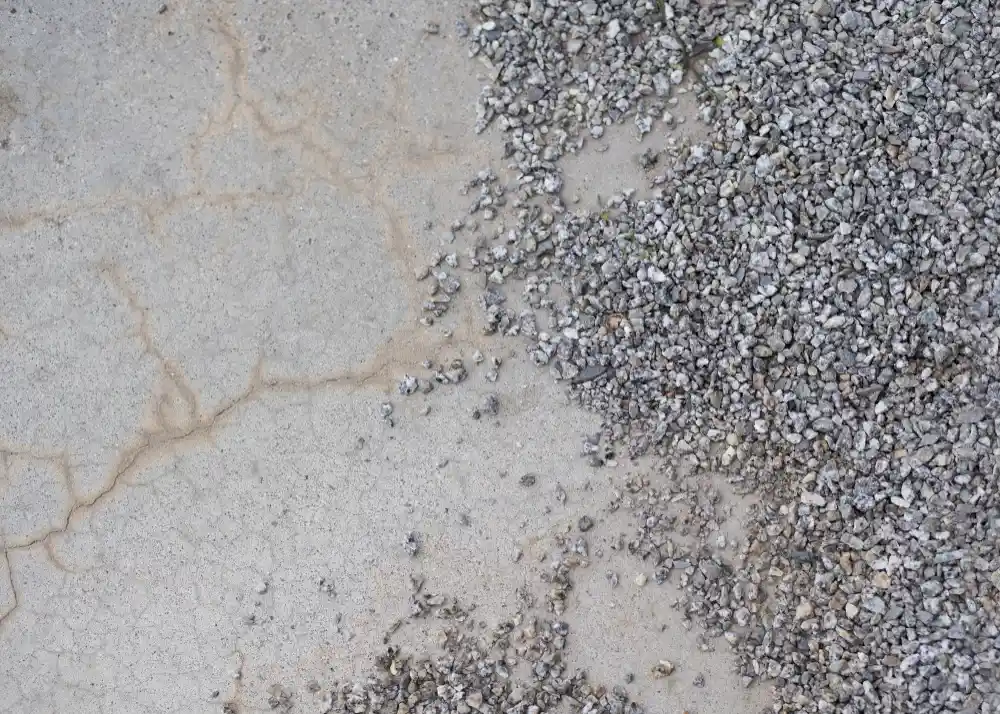
Wide cracks (more than 1/4 inch), cracks that run the full length or width of a slab section, cracks accompanied by settling or uneven surfaces, and spider-web pattern cracking across large areas all indicate more serious problems.
These usually point to base issues, soil movement, or installation problems. In many cases, repair isn’t a long-term solution—you’re looking at replacement.
Our Approach to Crack-Resistant Driveways
In 30+ years serving Columbus and Central Ohio, we’ve refined our process to minimize cracking risk.
We start with thorough site evaluation. Every property is different, and understanding soil conditions, drainage patterns, and site-specific challenges is critical before we break ground.
Our installation includes proper excavation depth for your specific soil conditions, quality compacted gravel base in layers, air-entrained concrete designed for freeze-thaw resistance, appropriate thickness and reinforcement, control joints every 8-10 feet, and proper sloping for drainage.
We also time our projects for optimal weather. We won’t pour concrete if conditions aren’t right, even if it delays the project by a few days. Doing it right matters more than doing it fast.
Frequently Asked Questions
Are hairline cracks in new concrete normal?
Yes, some hairline cracking during the first year is normal as concrete cures and settles. As long as the cracks are thin (less than 1/8 inch) and not accompanied by settling or widespread pattern cracking, they’re typically not a structural concern.
Can cracked concrete be repaired, or does it need replacement?
It depends on the extent and cause of cracking. Isolated hairline cracks can be sealed. But if you’re seeing widespread cracking, settling, or cracks wider than 1/4 inch, those usually indicate base or soil issues that repair won’t fix. In those cases, replacement is the more cost-effective long-term solution.
How soon after installation might cracks appear?
Some hairline cracks can appear within the first few months as the concrete fully cures. Control joint cracks often appear within the first year. If you’re seeing significant cracking in the first 1-2 years, that’s a red flag pointing to installation or base preparation issues.
Concerned about cracks in your driveway? Contact CR Concrete Construction for a free assessment, or call Carlos at (614) 679-4338 to discuss your options.